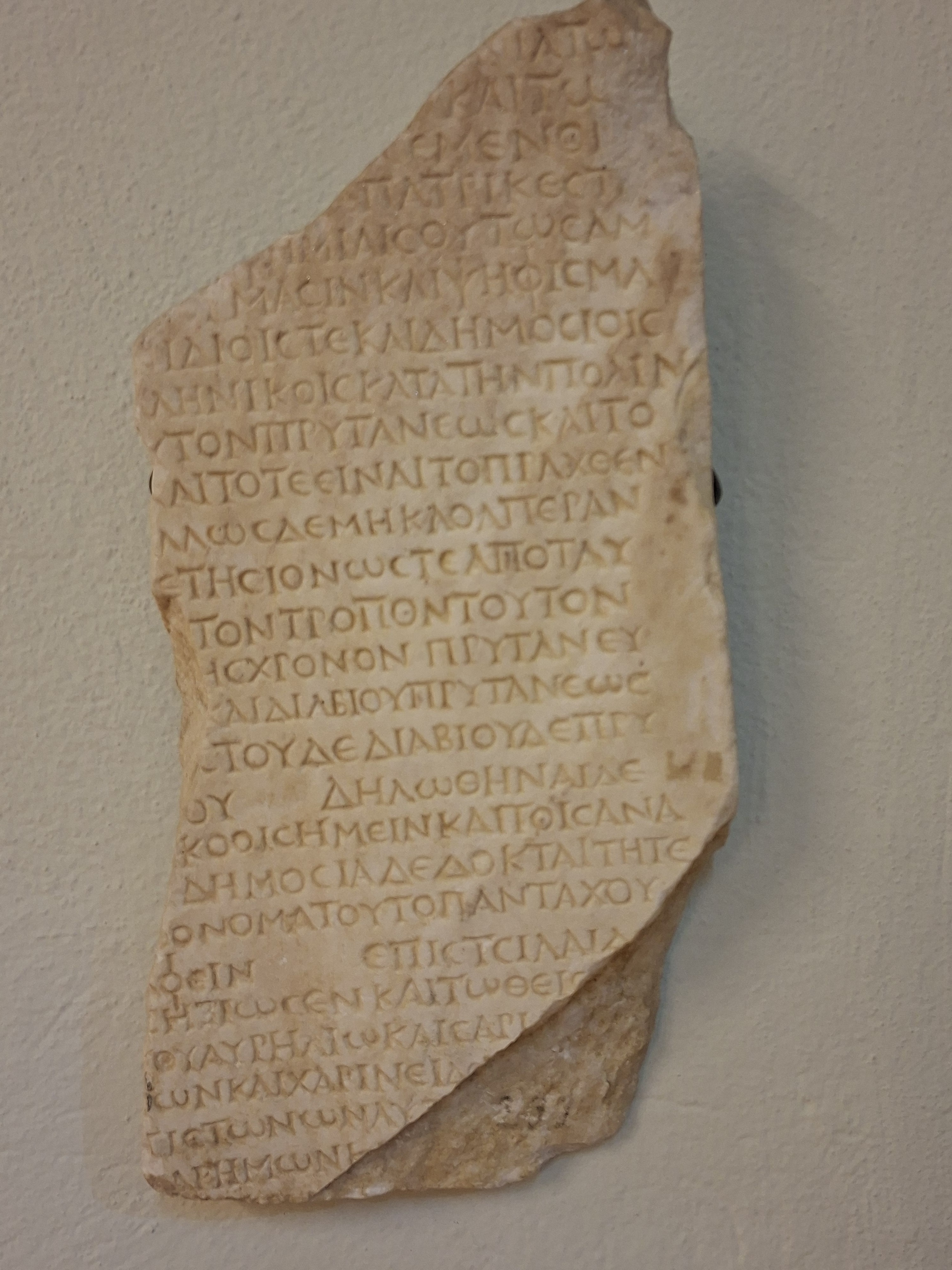
A fragmentary Greek inscription on marble exhibited in the…
By Anonymous · published 28 Oct 2026
Interpretation
AI interpretation, unverified
SUMMARY
A fragmentary Greek inscription on marble exhibited in the Archaeological Museum of Apollonia (Albania), recording a civic decree regarding the office of the prytanis (chief magistrate) and honors connected with the Roman Emperor.
WRITING SYSTEM
Greek alphabet (monumental Roman-period lapidary script with slight serifs)
LANGUAGE
Ancient Greek (Koine)
TEXT
[...]ΙΑΤΩ[...] [...]ΚΑΙ ΤΩ[...] [...]ΟΜΕΝΟΙ[...] [...]ΠΑΤΡΙΚΕΣΤ[...] [...]ΙΜΙΑΙΣ ΟΥΤΩΣ ΑΜ[...] [...]ΜΑΣΙΝ ΚΑΙ ΨΗΦΙΣΜΑ[...] [ΙΔ]ΙΟΙΣ ΤΕ ΚΑΙ ΔΗΜΟΣΙΟΙΣ [ΕΛΛ]ΗΝΙΚΟΙΣ ΚΑΤΑ ΤΗΝ ΠΟΛΙΝ [...] ΤΩΝ ΠΡΥΤΑΝΕΩΣ ΚΑΙ ΤΟ[...] [...]ΑΙ ΤΟΤΕ ΕΙΝΑΙ ΤΟ ΠΡΑΧΘΕΝ [...]ΛΛΩΣ ΔΕ ΜΗ ΚΑΘΥΠΕΡΑΝ[...] [...]ΕΤΗΣΙΟΝ ΩΣΤΕ ΑΠΟ ΤΑΥ[...] [...] ΤΟΝ ΤΡΟΠΟΝ ΤΟΥΤΟΝ [...] [...]ΗΣ ΧΡΟΝΟΝ ΠΡΥΤΑΝΕΥ[...] [...]ΑΙ ΔΙΑ ΒΙΟΥ ΠΡΥΤΑΝΕΩΣ [...]ΤΟΥ ΔΕ ΔΙΑ ΒΙΟΥ Δ' ΕΠΙ ΤΥ[...] [...]ΟΥ ΔΗΛΩΘΗΝΑΙ ΔΕ [...] [...]ΚΟΟΙΣ ΗΜΕΙΝ ΚΑΙ ΤΟΙΣ ΑΝΑ[...] [...]ΔΗΜΟΣΙΑι ΔΕΔΟΚΤΑΙ ΤΗι ΤΕ [...] [...]ΟΝΟΜΑ ΤΟΥΤΟ ΠΑΝΤΑΧΟΥ [...] [...]ΟΣΙΝ ΕΠΙΣΤΕΙΛΑΙ [...] [...]ΤΗΣΩΣΙΝ ΚΑΙ ΤΩι ΘΕΙ[Ωι...] [...]ΟΥ ΑΥΤΗι ΤΩι ΚΑΙΣΑΡΙ[...] [...]ΟΥΝ ΚΑΙ ΧΑΡΙΝ ΕΙ[...] [...]ΤΕΙ ΤΩΝ ΣΥΝΔ[...] [...]ΑΡ' ΗΜΩΝ[...]
TRANSLITERATION
[...]iatō[...] [...]kai tō[...] [...]omenoi[...] [...]patrikest[...] [...t]imiais houtōs am[...] [...dē]masin kai psēphisma[tos...] [id]iois te kai dēmosiois [Hell]ēnikois kata tēn polin [...] tōn prytaneōs kai to[...] [...]ai tote einai to prachthen [...]llōs de mē kathyperan[...] [...]etēsion hōste apo tay[...] [...] ton tropon touton [...] [...]ēs chronon prytaneu[...] [...]ai dia biou prytaneōs [...]tou de dia biou d' epi ty[...] [...]ou dēlōthēnai de [...] [...]koois hēmin kai tois ana[...] [...dē]mosiai dedoktai tēi te [...] [...]onoma touto pantachou [...] [...]osin episteilai [...] [...]tēsōsin kai tōi thei[ōi...] [...]ou autēi tōi Kaisari[...] [...]oun kai charin ei[...] [...]tei tōn synd[...] [...]ar' hēmōn[...]
TRANSLATION
[...] and the [...] having been [...] ancestral [...] honors in such a way [...] and decree [...] both private and public [...] Greek in the city [...] of the prytanis (chief magistrate) and the [...] what has been done shall then be [...] and not otherwise exceeding [...] annual, so that from this [...] in this manner [...] time serving as prytanis [...] prytanis for life [...] and the one who is [prytanis] for life [...] but that it be declared [...] to us and to those [...] publicly it has been resolved by the [...] this name everywhere [...] to send a letter [...] and to the divine [...] to Caesar himself [...] and gratitude [...] of the [...] from us [...]
CONTEXT
Fragment of a marble stele displaying an official civic decree, discovered at the ancient Corinthian colony of Apollonia in Illyria (modern Pojan, Albania) and exhibited in the Apollonia Archaeological Museum. The prytanis was the supreme eponymous magistrate of ancient Apollonia; during the Imperial period, civic decrees frequently regulated magistracies (including lifetime tenures, 'dia biou') and conveyed honors or loyal communications to the Roman Emperor ('Kaisar'). Datable on palaeographic and historical grounds to the early/middle Roman Imperial period, approximately 1st to 2nd century CE.
CONFIDENCE
High
CAVEATS
• Location basis: a place the user set by hand on the map. • Coordinates provided manually match the Archaeological Museum of Apollonia (Pojan / Fier, Albania), corroborating the epigraphic formula specific to Apollonia's prytanis. • The text is broken on all four margins, with parts of 26 lines preserved. • Key institutional terms visible include πρύτανις (chief magistrate), διά βίου (for life), δέδοκται (standard decree formula 'it was resolved'), and references to Caesar / the Emperor (τῷ Καίσαρι, τῷ θείῳ).
LOCATION
Pojan, Albania
Exact position: 40.7205334302863, 19.4715449586511
Position placed by hand on the map
Open in OpenStreetMap